Anterior Eye, Clinical Trials and Research Translation Unit
Research Overview
The Anterior Eye Clinical Trials and Research Translation Unit pursues integrated discovery, clinical and translational research, as a foundation for improving eye care. Established in 2013 and led by Professor Laura Downie, the Unit combines advanced imaging and molecular platforms with clinical trial expertise to develop biomarkers, evaluate diagnostics and therapeutics, and translate evidence into practice. Prof Downie has secured more than $14M in competitive, philanthropic and industry funding to support the Unit’s infrastructure and research program.
Research themes
The Anterior Eye, Clinical Trials and Research Translation Unit seeks to advance healthcare and improve patient outcomes, by pursuing world-class research that drives transformational changes in eye care practice. Research undertaken in the Unit has three major foci:
- Discovery science: developing and validating new biomarkers for eye and systemic conditions (e.g., diabetic neuropathy, uveitis). Key elements of this research are pursued in collaboration with A/Prof Holly Chinnery (University of Western Australia), through the FrontTear Research Centre, which focuses on investigating ocular immunological signatures and the role of the immune system in health and disease.
- Clinical trials: investigator-initiated and industry-engaged trials of new diagnostics and therapeutics, spanning Phase I to IV device and drug studies.
- Research translation: the Unit is a Cochrane Eyes and Vision Centre for Evidence-Based Vision Care, one of nine such centres globally recognised for sustained excellence in high-quality systematic reviews to advance evidence-based care and inform health policy. Our Unit has a deep understanding of robust evidence synthesis, as a basis for evidence-based decision making, and pursues ongoing activity to support the translation of research into practice.
Discovery science
By integrating fundamental biology and clinical science, we aim to identify new biomarkers based on: (a) analysing tears, using advanced biomolecular, immunological and biophysical approaches; and (b) defining human corneal immune features, using a non-invasive in vivo imaging approach pioneered in our FrontTear Research Centre, which we term Functional In Vivo Confocal Microscopy (Fun-IVCM).
Tears as a biomarker platform: Our team has made several advances, including patent-protected discoveries, relating to leveraging human tears as indicators of health and disease, across a spectrum of conditions ranging from dry eye disease to diabetes.
Fun-IVCM imaging – human corneal dynamic immune imaging at single-cell resolution: The cornea is the only tissue where sensory nerves and immune cells can be non-invasively imaged in living humans. Using the Fun-IVCM method developed by our team, we have captured the first live cell imaging of corneal T cells, dendritic cells and macrophages in humans. This research has redefined understanding of human corneal immunology, including identifying the presence of T cells in healthy human corneas, with demonstrated changes to their dynamics in acute and chronic inflammation. Changes to corneal immune cell morphology and behaviour, captured using Fun-IVCM, show utility as biomarkers of disease and therapeutic intervention, with capacity to inform development of targeted therapeutics. Fun-IVCM has also been used as an exploratory endpoint in recent clinical trials.
Further details about Fun-IVCM imaging, and its application in the clinical evaluation of immune status, are available in our recent publications:
- Rajan R, Wu M, Bedggood P, Metha AB, Selva KJ, Chung AW, Chinnery HR, Downie LE. Post-LASIK corneas show sub-clinical differences in sensory nerves and immune cell morphodynamics. Ocul Surf. 2026 Apr 7;41:26-36.
- Bedggood P, Wu M, Zhang X, Rajan R, Wu CY, Karunaratne S, Metha AB, Mueller SN, Chinnery HR, Downie LE. Improved tracking of corneal immune cell dynamics using in vivo confocal microscopy. Biomed Opt Express. 2024 Oct 10;15(11):6277-6298.
- Wu M, Fletcher EL, Chinnery HR, Downie LE, Mueller SN. Redefining our vision: an updated guide to the ocular immune system. Nat Rev Immunol. 2024 Dec;24(12):896-911.
- Wu M, Zhang X, Karunaratne S, Lee JH, Lampugnani ER, Selva KJ, Chung AW, Mueller SN, Chinnery HR, Downie LE. Intravital Imaging of the Human Cornea Reveals the Differential Effects of Season on Innate and Adaptive Immune Cell Morphodynamics. Ophthalmology. 2024 Oct;131(10):1185-1195.
- Downie LE, Zhang X, Wu M, Karunaratne S, Loi JK, Senthil K, Arshad S, Bertram K, Cunningham AL, Carnt N, Mueller SN, Chinnery HR. Redefining the human corneal immune compartment using dynamic intravital imaging. Proc Natl Acad Sci U S A. 2023 Aug;120(31):e2217795120.
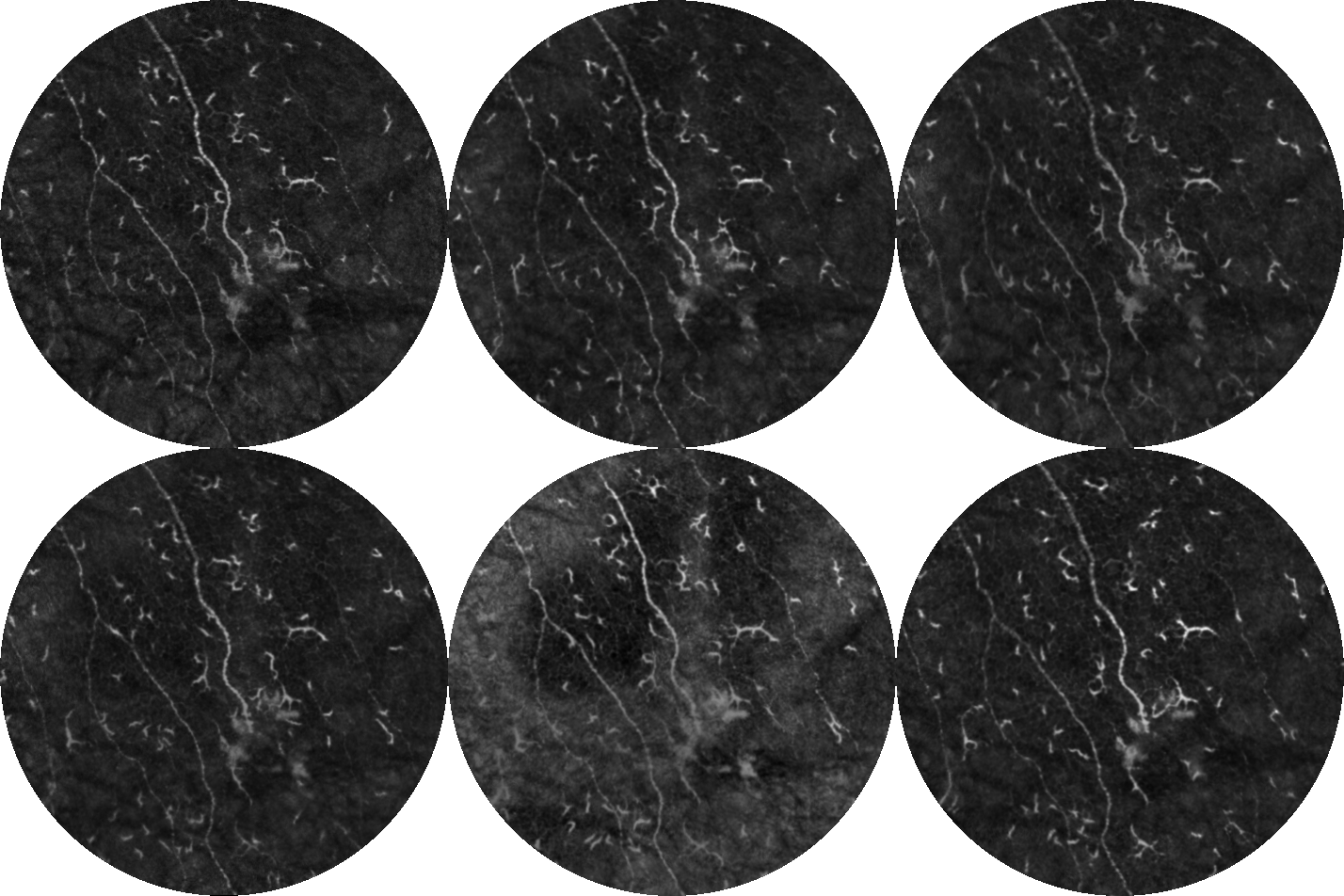
Fun-IVCM video: A time-lapsed Fun-IVCM video of the human corneal epithelium, showing the surveillance of T cells (small motile cells) and the probing behaviour of dendritic cells (larger relative sessile cells), over ~25 minutes. The horizontal x vertical field of view is about 250 x 250 microns.
Preclinical studies: We pursue complementary animal and ex vivo studies to investigate ocular immunology and mechanisms underpinning corneal and retinal immune responses, across a range of conditions including diabetes and stroke. By understanding how specific types of ocular immune cells are altered during disease, we can move towards using ocular imaging to diagnose and monitor pathologies in clinical contexts.
Clinical trials
Our Unit specialises in the design, leadership, governance and execution of ophthalmic clinical trials. This research aims to advance understanding of eye conditions, and how to best treat them. It enables our patients, and the Melbourne community, to have timely access to the newest treatments, often before they are broadly available. We are also committed to translating our Unit’s discovery science into usable technologies and treatment modalities, with a goal to improve clinical care.
Prof Downie has led multi-disciplinary teams and supervised staff as Principal Investigator for more than 25 clinical trials, comprising over 5,000 participant study visits. Our studies include investigator-initiated and pivotal multi-centre trials that have led to new device and drug regulatory approvals. We maintain a growing, sub‑categorised research participant database, compiled over years of clinical activity and professional collaboration. Through our referral networks and partnerships, we capture a broad spectrum of participants, to support robust and generalisable research.
Our primary focus area is non-surgical interventions for ocular conditions, including dry eye disease, allergy, keratoconus, pterygium, contact lens discomfort, myopia, anterior uveitis, digital eye strain / computer vision syndrome and presbyopia.
We possess expertise in Phase I to IV clinical trials. We have a sustained track record of successful clinical trial delivery, engagement with external sponsors and contract research organisations, and leadership of peer‑reviewed publications. Sponsors consistently return to work with our research Unit, with new innovations, further to our academic expertise, and rigorous and streamlined approach.
Our state-of-the-art facilities are located in the Department of Optometry and Vision Sciences at the University of Melbourne, 200 Berkeley Street, Carlton, Victoria, Australia. Key technical capabilities include streamlined participant recruitment, in-house experience with highly-successful research participant marketing campaigns, advanced analytical methods (including biofluid proteomics), and the capacity for blood analyses. All our clinical trial staff have current TransCelerate-approved ICH Good Clinical Practice (GCP) certification.


Examples of our clinical trial publications include:
- Downie LE, Craig JP, Stapleton F, Tan J, Jones LW, Ng A, Hinds M, Bosworth C, Alster Y. Efficacy and safety of AZR-MD-001 selenium sulfide ophthalmic ointment in adults with meibomian gland dysfunction over six months of treatment: A Phase 2, vehicle-controlled, randomized extension trial. Ocul Surf. 2025 Jan;35:15-24.
- Gocuk SA, McKendrick AM, Downie LE. Point-of-care tools to support optometric care provision to people with age-related macular degeneration: A randomised, placebo-controlled trial. Ophthalmic Physiol Opt. 2022 Jul;42(4):814-827.
- Singh S, Downie LE, Anderson AJ. Do Blue-blocking Lenses Reduce Eye Strain From Extended Screen Time? A Double-Masked Randomized Controlled Trial. Am J Ophthalmol. 2021 Jun;226:243-251.
- Britten-Jones AC, Kamel JT, Roberts LJ, Braat S, Craig JP, MacIsaac RJ, Downie LE. Investigating the Neuroprotective Effect of Oral Omega-3 Fatty Acid Supplementation in Type 1 Diabetes (nPROOFS1): A Randomized Placebo-Controlled Trial. Diabetes. 2021 Aug;70(8):1794-1806.
Research translation
A further focus of the Unit is to advance the translation of research into practice. This pillar focuses on improving patient outcomes by identifying and promoting implementation of the best-available evidence into eye care practice.
Under Prof Downie’s leadership, in 2021 the Department of Optometry and Vision Sciences become only the second Cochrane Eyes and Vision Group Centre for Evidence-Based Excellence in the Southern Hemisphere. This achievement recognises sustained contributions to the field, including multiple Cochrane systematic reviews, invited editorial contributions in leading journals relating to evidence-based practice, and lectures at pre-eminent international scientific meetings.
Our has team developed a novel optometric clinical care audit tool (CCAT) for optometrists to audit the clinical care provided to patients with diabetes mellitus relative to national guidelines. This resource is freely available for optometrists to download and use.
We are also currently undertaking several national and international projects relating to the development of clinical guidelines and systematic reviews, including in the areas of uveitis, keratoconus, dry eye disease and diabetes.
Examples of our recent systematic review papers include:
- Lawrenson JG, Huntjens B, Virgili G, Ng S, Dhakal R, Downie LE, Verkicharla PK, Kernohan A, Li T, Walline JJ. Interventions for myopia control in children: a living systematic review and network meta-analysis. Cochrane Database Syst Rev. 2025 Feb 13;2(2):CD014758.
- Rajan R, Makrai E, Lee JH, Singh S, Chinnery HR, Downie LE. Evaluating the efficacy and safety of therapeutic interventions for corneal neuropathy: A systematic review. Ocul Surf. 2024 Jul;33:80-98.
- Singh S, McGuinness MB, Anderson AJ, Downie LE. Interventions for the Management of Computer Vision Syndrome: A Systematic Review and Meta-analysis. Ophthalmology. 2022 Oct;129(10):1192-1215.
Staff
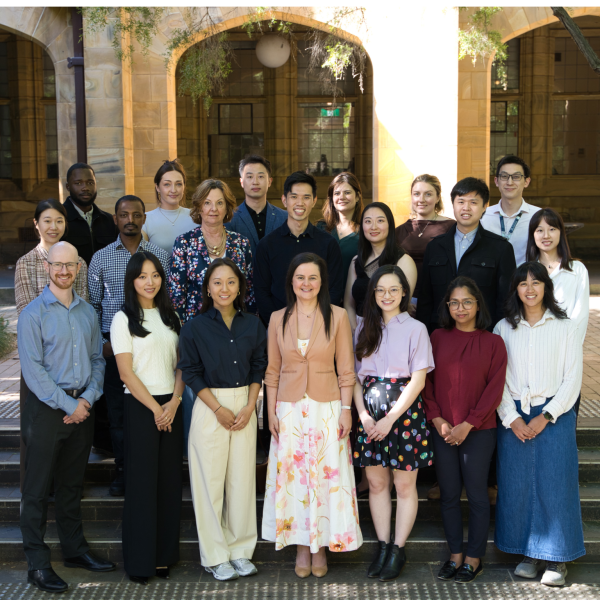
As an integrated team of clinician researchers and discovery scientists, our staff are committed to advancing eye care, through undertaking innovative research that advances understanding of the biology and function of the eye, and enables the development and translation of new ophthalmic diagnostics and therapies into practice.
Senior Research Fellow
Post-doctoral Research Fellows
- Dr Mengliang Wu
- Dr Jeremy Chiang
- Dr Ching Yi Wu
- Dr Jasmine Castro
Clinical Research Optometrists
- Ji-hyun (Anna) Lee
- Dr Senuri Karunaratne
- Patrick McMillan
- Eve Makrai
- Thien (Sue) Huynh
- Dr Alyssa Curkpatrick
Executive Assistant
- Kelly Mikunda
Key collaborators
The Unit’s activity involves collaborations across many disciplines, including biomedicine, immunology, proteomics, neuroscience, neurology, ophthalmology, biostatistics, clinical trials, evidence synthesis, implementation science and biomedical engineering. The Unit’s integration of pre-clinical, clinical and translational research has been foundational to delivering both knowledge impact (through discovery science) and real-world health impacts (through a translational pipeline, integrated with consumer engagement and public outreach).
Key collaborators include:
- Associate Professor Holly Chinnery, University of Western Australia
- Professor Scott Mueller, Doherty Institute - University of Melbourne
- Professor Lyndell Lim, Centre for Eye Research Australia and University of Melbourne
- Professor Stuart Allan, University of Manchester
- Associate Professor Andrew Symons, Eye Surgery Associates
- Associate Professor Oanh Nguyen, Doherty Institute - University of Melbourne
- Professor Erica Fletcher, University of Melbourne
- Doctor Phillip Bedggood, University of Melbourne
- Professor Andrew Metha, University of Melbourne
- Professor Amy Brodtmann, Monash University
- Distinguished Professor Leslie Yeo, RMIT University
- Professor Stephanie Watson, University of Sydney
- Professor Craig Smith, University of Manchester
Funding
The Anterior Eye, Clinical Trials and Research Translation Unit are currently funded by the NHMRC (Investigator Grant – Leadership 1 – Prof Laura Downie, 2025-9), ARC (Discovery Project, 2023-6), Department of Education Australian Economic Accelerator, University of Melbourne, philanthropy and industry.
Graduate Students
The research Unit currently provides research training to domestic and international PhD and Masters candidates.
Opportunities exist for motivated and committed research higher degree students and research clinicians to join our research Unit.
Contact
For collaboration, clinical trial enquiries or research training opportunities, please contact Professor Laura Downie: ldownie@unimelb.edu.au.