Researchers in global trials of a totally implantable cochlear implant
Associate Professor Karyn Galvin
Totally implantable cochlear implants (TICIs) aim to give people with severe-profound hearing impairment access to sound without any external parts. Researchers in the Department of Audiology and Speech Pathology (DASP), Prof Bob Cowan, A/Prof Karyn Galvin and Evelyn Do, who work with HEARnet Clinical Studies, have run a number of TICI trials with Prof Robert Briggs at The Royal Victorian Eye and Ear Hospital.
Dr Adrienne Paterson, also from DASP and HEARnet, has managed these complex trials involving surgeries at multiple Melbourne hospitals. TICI recipients have appreciated the practical benefits of 'invisible' hearing that aren't typically achievable with traditional cochlear implants. These include being able to hear whilst showering or swimming, and while in hot or dusty environments where sweat and dirt are a problem for hearing devices. They also appreciate being able to hear sounds overnight, such as children crying.
There are still technical hurdles, especially internal body noises (chewing, breathing) being picked up by subcutaneous microphones, and important long-term safety and performance questions to answer. HEARnet and the DASP researchers are now collaborating with Prof Briggs to run the Australian site of the pivotal ENTERPRISE study, which aims to build that evidence. A commercial TICI is not yet available, and the clinical advice is that people who need an implant should proceed with the established technology rather than waiting for future devices.
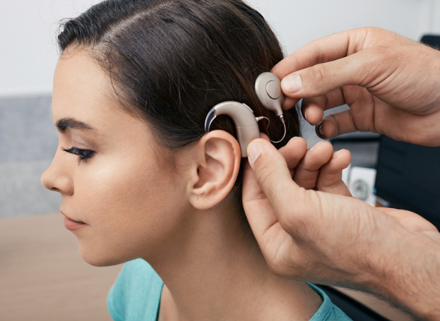
Image description: A traditional cochlear implant showing all external components, including the microphone, that are implanted subcutaneously in the TICI procedure.