Primary school visit inspires the next generation of healthcare students
Students from Watsonia Heights Primary School were excited to learn about vision sciences and physiotherapy when five representatives from the Melbourne School of Health Sciences visited them for Science Day.
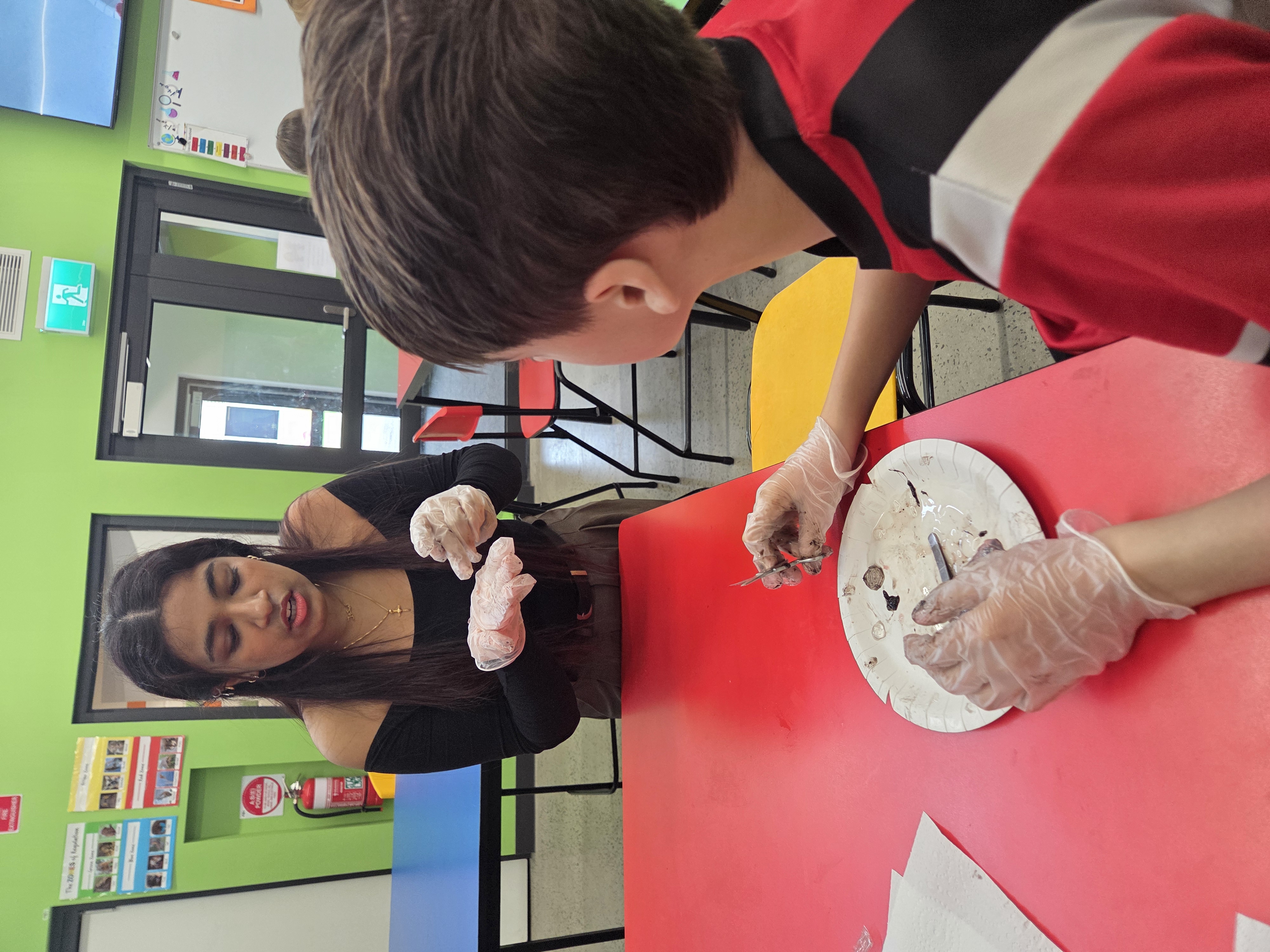
Grade 6 students took part in cow eyeball dissections, following a presentation on the function and structure of the eye from Yashvi Bhatt and Nicole Fernandes from the Department of Optometry and Vision Sciences. The students donned gloves and protective eyewear as they followed instruction and carefully pierced and cut through the eyeball to reveal the structural components they had learned about.
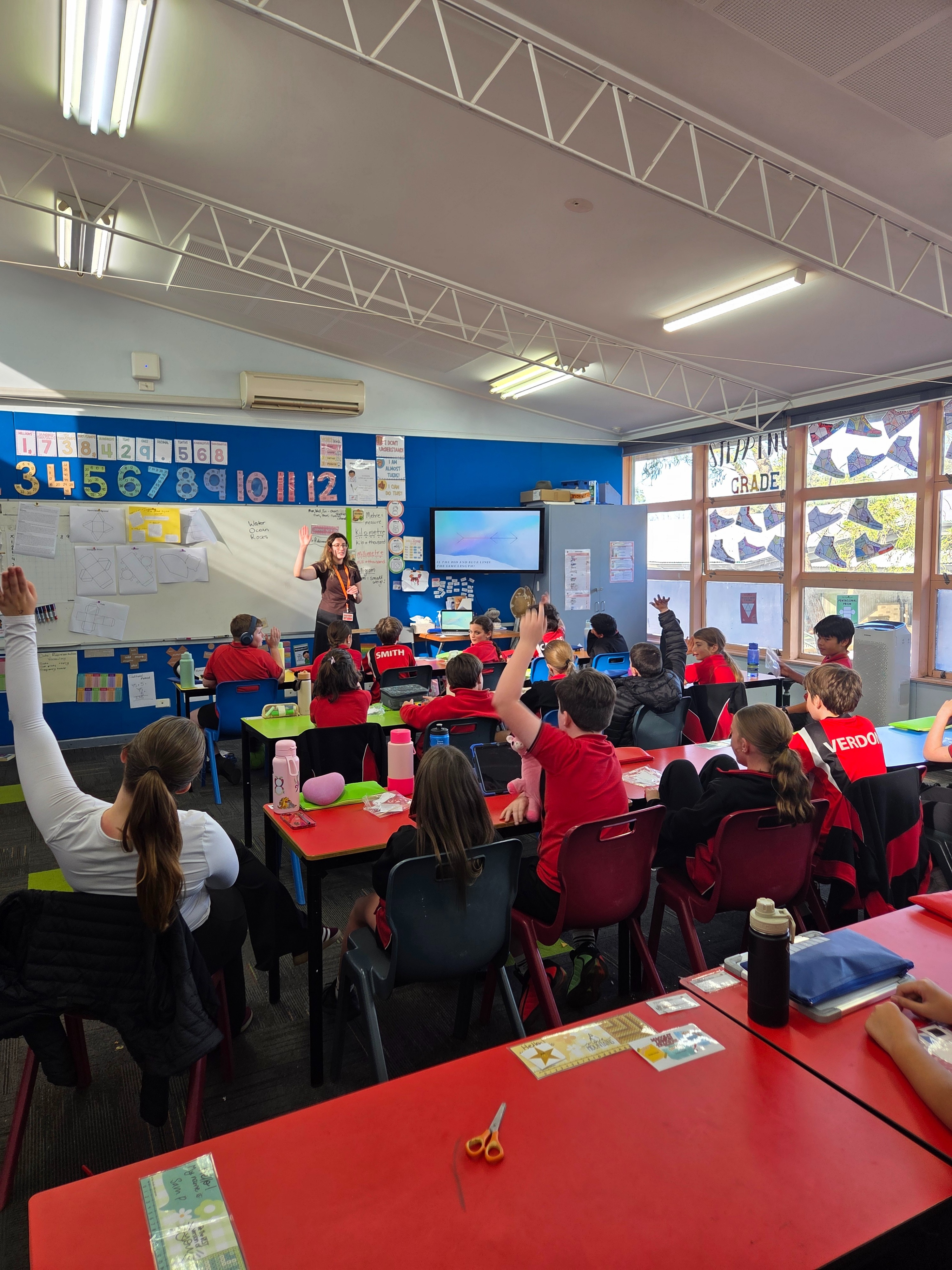
The students in grade 5 were treated to presentations from Rebekah James and Hadi Abboud-Issa from the Department of Optometry and Vision Sciences who spoke about how the brain interprets signals from the eyes and makes sense of the visual world around us. Eli Flenady from the Department of Physiotherapy had the students jumping, stretching and flexing to understand the role of joints and muscles in their bodies.
Presentations were followed by discussion time, with the children asking brilliant and often unexpected questions.
Our MSHS representatives reflected on their experiences –
Once again, the students at Watsonia Heights Primary School were an absolute pleasure to teach! They are so enthusiastic and eager to learn, and were incredibly excited to try dissecting. It’s amazing that you and the teachers organise these opportunities. Engaging with science practically rather than just theoretically makes such a difference.
We were just saying how much we would have loved having such hands-on experiences when we were in primary school ourselves. For me, primary school was when my own teachers nurtured my curiosity and put up with all my questions. So its great to have the opportunity to give back to the community. – Yashvi Bhatt
It was such a wonderful experience and a great reminder of the value of scientific outreach. We had lots of opportunity for interaction through activities exploring colour vision, and doing our ‘experiment’ to demonstrate how our central and peripheral vision works. The students’ curiosity and excitement were infectious, and they engaged in the activities with incredible enthusiasm.
While I was blown away with the number of thoughtful questions the students asked, I think my favourite was “what do you need to be a scientist?”. It was a privilege to share my thoughts that the most important qualities are curiosity, always asking lots of questions, and perseverance when things don’t go according to plan. Many of the kids expected me to say that you need to be the ‘smartest’, so I hope this was valuable for them to hear.
My main goal for the session was to encourage the students to keep asking questions and stay curious about the world around them. I have no doubt there were some future scientists in the classrooms I visited! – Rebekah James
Thanks to Eli, Rebekah, Yashvi, Hadi and Nicole and to Emma MacDonald at Watsonia Heights Primary School for having us back for the third year in a row to teach students and hopefully inspire a career in health. We hope to see many of them in our classrooms at the University of Melbourne in about 10 years’ time!