Learning from Lived Experience: A bridge between classroom learning and authentic conversations with people with aphasia
By Dr Georgie Johnson & Dr Meg Keage.
Aphasia is an acquired communication disorder, often following stroke or brain injury, that can affect a person’s ability to talk and express their message or understand language. It can significantly affect social participation, independence, and quality of life.
Something that can make a huge impact for people with aphasia, is having a conversation partner that can support their communication needs. Across April and May this year, our first-year Master of Speech Pathology students participated in a workshop series to learn about Supported Conversations for Adults with Aphasia (SCA) - a program which equips the learner with knowledge and skills on how to better engage with, and listen to, those with a communication disability to have productive conversations.
We are fortunate to celebrate an ongoing partnership with speech pathologists Kathryn McKinley (Northern Health) and Ruth Townsend (Austin Health) who lead these workshops with our first year students, bringing a wealth of knowledge and skill in educating the next generation of speech pathologists in SCA.
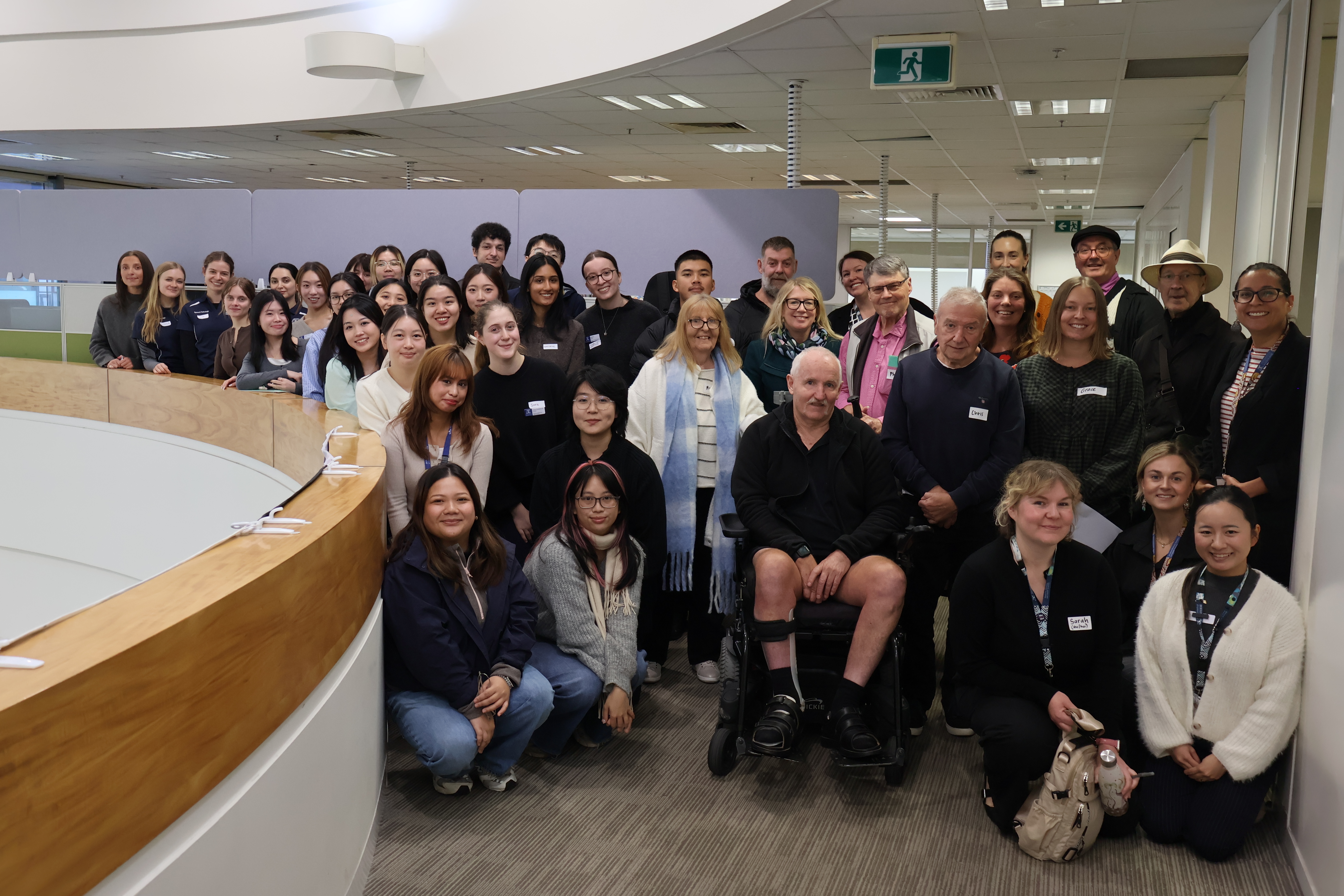
Following the workshops, students worked directly with community volunteers with aphasia who generously offered their time and lived experience. Across these sessions, students practised supported conversation strategies including skills like key-word writing, use of gesture and visual supports, checking understanding through summarising, and carefully structuring questions to make communication clearer and more inclusive. The emphasis was not only on effective communication, but also on creating respectful and enjoyable conversations that recognise the competence, identity, and agency of a person with aphasia.
Post-workshop debrief discussions allowed students to reflect on their communication choices, ethical practice, and how small adjustments can meaningfully improve shared understanding. Volunteers reported positive experiences, including improved rapport, clearer exchanges, and moments of genuine humour and connection.
This year we were delighted to host a record number of volunteers, ranging from long-standing participants who have supported the program for over a decade to new volunteers. The volunteers were generous in their knowledge-sharing and contributed to student learning as educators, sharing stories about their diverse experiences including time as university professors and international pastry chefs. Their ongoing involvement provides an invaluable bridge between classroom learning and authentic communication experiences for our speech pathology students.
Dr Meg Keage from the Department of Audiology and Speech Pathology is leading a research project in collaboration with partners Ruth Townsend and Kathryn McKinley, and allied health disciplines including physiotherapy and music therapy, to explore how supported conversation strategies can be taught across more healthcare courses at the University of Melbourne. The aim is to embed these skills early in university education to strengthen communication experiences for people accessing healthcare services.