Audiology researchers secure $2,752,000 to advance hearing science and care
Researchers from the Department of Audiology and Speech Pathology have secured a combined total of $2,752,000 in new funding. This suite of new grants will support work from neural hearing aid algorithms and diffusion MRI biomarkers to an inner ear cell atlas and classroom acoustics research.
The funding supports several distinct but complementary projects:
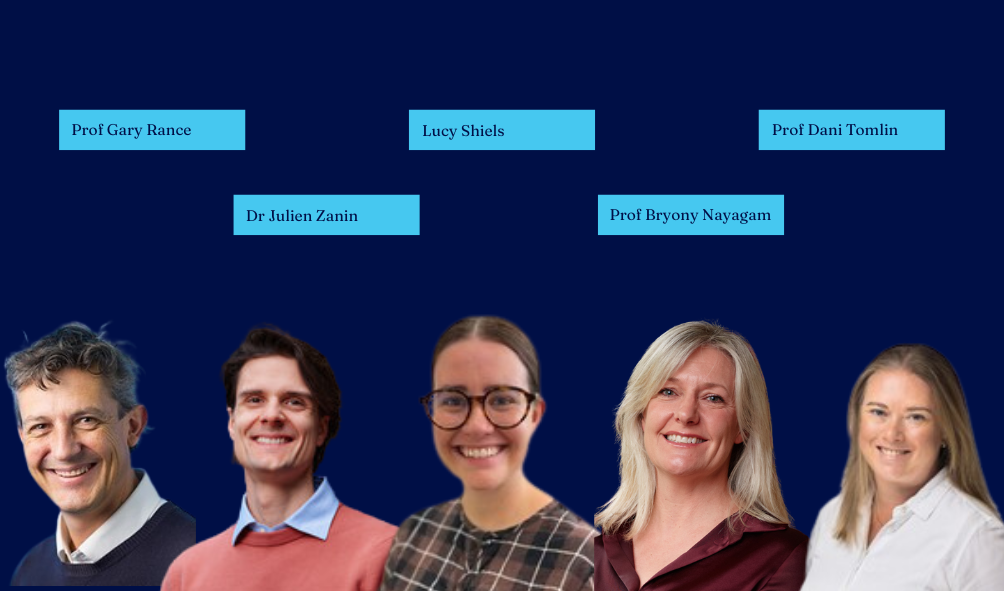
- Professor Gary Rance and Dr Julien Zanin have won $350,000 from SONOVA for ‘Deep Neural Network Hearing Aids for Auditory Neuropathy’, a project developing deep learning hearing aid algorithms to improve speech perception for listeners with auditory neuropathy.
- Professor Rance, Dr Zanin and Lucy Shiels have also been awarded $450,000 through a Sonova AG Clinical Research Grant for ‘Deep Neural Network and Directional Microphone Hearing Aids for Auditory Processing Disorder, including children with Autism and ADHD’, which will combine neuralnetwork approaches with directional microphone technology to better support children and adults with auditory processing differences.
- Dr Zanin and collaborators (including Professor Rance and teams at Murdoch Children’s Research Institute and international partners) have secured two complementary grants: $122,000 from the Friedreich’s Ataxia Research Alliance (FARA) for ‘Diffusion MRI and audiological biomarkers for Friedreich Ataxia disease progression’, and a further $200,000 from La Fondation Maladies Rares (AFAF) to develop diffusionweighted MRI metrics of the auditory system as biomarkers for FRDA progression.
- Associate Professor Bryony Nayagam has been awarded the Garnett Passe and Rodney Williams Senior Fellowship ($1,300,000 over five years) to produce the world’s first Inner Ear ‘cell atlas, a singlecell reference that will underpin regenerative and therapeutic research.
- Professor Gary Rance, Lucy Shiels and Professor Dani Tomlin have received $330,000 from the Victorian Deaf Education Institute to investigate ‘The impact of classroom environment (open plan vs enclosed plan) on phonics development and academic progress in early primary school students’, a study poised to inform school design and support for children with hearing difficulties.
Together, these awards span fundamental discovery, clinical biomarker development, assistive technology innovation and educationfocused research. They reflect strong internal collaboration, along with buyin from industry, clinical and charitable partners, positioning the Department to translate discoveries into better diagnostics, device algorithms, classroom practice and therapeutic directions.
Congratulations to all investigators and collaborators!