Shaping Tomorrow's Healthcare: Physio's Innovative Strides at ANZAHPE 2025
The ANZAHPE 2025 Conference, themed ‘Embracing the Future’, was held in Perth from 30 June to 3 July. It aimed to address the intersection of traditional education and technological advancements in healthcare.
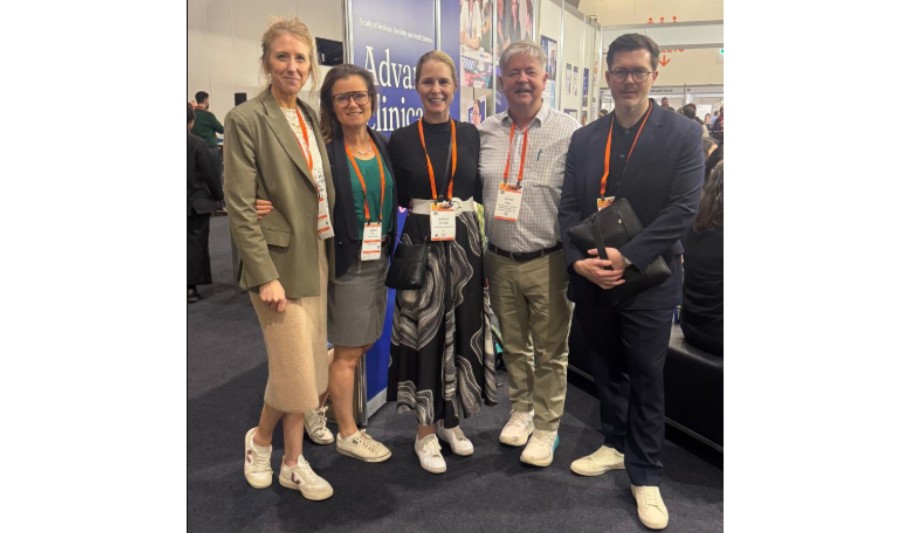
The event featured pre-conference workshops, keynote speakers, presentations, and collaborative learning sessions, focusing on shaping the future of health professions education. Five staff members of the Department of Physiotherapy presented 12 abstracts focusing on projects run within the department and the Melbourne School of Health Sciences.
The Department of Physiotherapy’s showcase of innovative projects reflects future-forward thinking in how students are being prepared to effectively and comprehensively manage a changing patient population, meeting patients’ needs and optimising the journey toward better health outcomes.
Aiden Smart
Aiden Smart presented on the successful implementation of a pre-placement simulation pilot involving 125 second-year physiotherapy students using standardised patients in high-fidelity acute and community scenarios. Students reported improved pre-placement confidence in clinical decision-making and significantly valued the unique simulation actor feedback before faculty and peer debriefing. Students also identified structural elements of patient interactions as valuable for placement preparation, separate from theoretical and environmental elements.
Dr Jessica Lees
Jessica Lees presented the Safer Spaces project; and the design and delivery of trauma informed curriculum for peer physical examination in the Doctor pf Physiotherapy. She also presented one of her PhD papers published in Advances in Health Professions Education ‘Digital Technology in Physical Examination Teaching: Clinical Educators' Perspectives and Current Practices’. Jess also joined Tim Beaumont in presenting ‘Educational Excellence at Scale: Development of a Framework informed by a Faculty Feedback Fever’.
Dr Kim Allison
Kim Allison presented the development and evaluation of a curriculum module implemented for first year physiotherapy students at the University of Melbourne and University of Toronto. Designed to leverage global capital and position weight stigma in healthcare as a global issue, this online module was effective in reducing stigmatised attitudes towards weight in first year physiotherapy students. Kim also presented what students see as important curriculum to support them when working on clinical placements, highlighting feelings of under-preparedness to work with patients with mental ill health and the importance of curriculum supporting their understanding of their scope of practice and how to support patients with mental ill health. Finally, Kim presented the perspectives of persons with lived experience of persistent pain and what they see as essential for physiotherapists to understand on the topic, informing the development of pain curriculum within our Doctor of Physiotherapy program.
Dr Jessica Stander
Jessica Stander reported on a scoping review exploring evidence in pain curriculum development, evaluation and implementation in health professional higher education. She identified gaps in best practice standards for pain curricula implementation. She also presented the methodological approach the University of Melbourne team is following to vertically and horizontally align the University of Melboune Doctor of Physiotherapy pain curriculum to international best-practice evidence. Jess also presented on the perspectives of Physiotherapy experts and educators on the feasibility and acceptability of SpinalLog 2 in the teaching and learning of psychomotor/haptic skills in joint mobilisation.
Dr David Kelly
David Kelly presented the findings of a scoping review exploring the literature on efficacy of manual/haptic devices for teaching spinal manual therapy psychomotor skills in tertiary education. Most studies examined quantification of aspects of force application with objective device/ subject inter-rater (poor) and intra-rater reliability (better). The diverse device types made comparisons difficult with few studies examining haptic aspects. Future research should clearly state learning approaches utilised.
Written by Dr Jessica Stander