Ensuring person-centred care for people with rare and less common cancers
On 2 September 2025, over 200 patients, carers, clinicians, support and advocacy organisations, scientists, researchers and policy makers came together at Parliament House in Canberra to commit to shifting the dial on equity, experiences and outcomes for people affected by rare and less common cancers.
Each year in Australia, 40,000 people are diagnosed with a rare (less than 6 people in 100,000) or less common (12 per 100,000 people) cancer. People with rare and less common cancers are more likely to experience significant delays in diagnosis, access to optimal care and treatment and affordable lifesaving or life prolonging drugs. They disproportionately account for the burden of cancers in younger (<50 years) people and people with a rare or less common cancer are more likely to die from their disease than other cancer groups.
At the CanForum meeting, Rare Cancers Australia - the leading national advocacy and support organisation for people affected by rare and less common cancers - launched their most powerful report yet - Now it’s personal: access and equity for all. Informed by the voices of over 2500 people with lived experience, the report is a powerful call to arms making visible the inequity experienced by people as they try to navigate timely referral for tests, diagnosis and access to medicines. The accounts of years of delays in securing a diagnosis, financial burden to the point of bankruptcy, lack of information, support and help to navigate an impossibly complex health system were both sobering and galvanising.
The voices of people with lived experience were powerful.
Hearing people’s stories about sitting next to a person in a cancer clinic who has free access to a life prolonging drug effective for your cancer, but for which you have to pay many thousands of dollars because the drug is not listed on the PBS for your rare or less common cancer, highlighted the inequity experienced by so many people. We heard accounts by people with lived experience of having to decide between crowd sourcing funds or borrowing money from friends and family to continue with treatment or stop therapy for the future financial security of their family. This is unthinkable and yet is the reality for many people living with a rare and less common cancer.
At CanForum we were challenged to think about what each of us can do, every day, to tackle this inequity. We heard of the investment being made by NHS England to mainstream genomic testing for people diagnosed with cancer - a truly groundbreaking national policy to ensure equitable access to genomic testing and optimal care for everyone - irrespective of capacity to pay. In Australia we have some of the best scientists in the world driving genomic and proteomics advances, but as a nation we currently lack the quantum of investment needed for sustainable translation and integration of genomics into mainstream cancer care.
Our regulatory processes means that 1 in 4 drugs available to people in other countries are not available to Australians with rare and less common cancers. At CanForum we heard from people with lived experience, clinicians, scientist and researchers demanding that we do better.
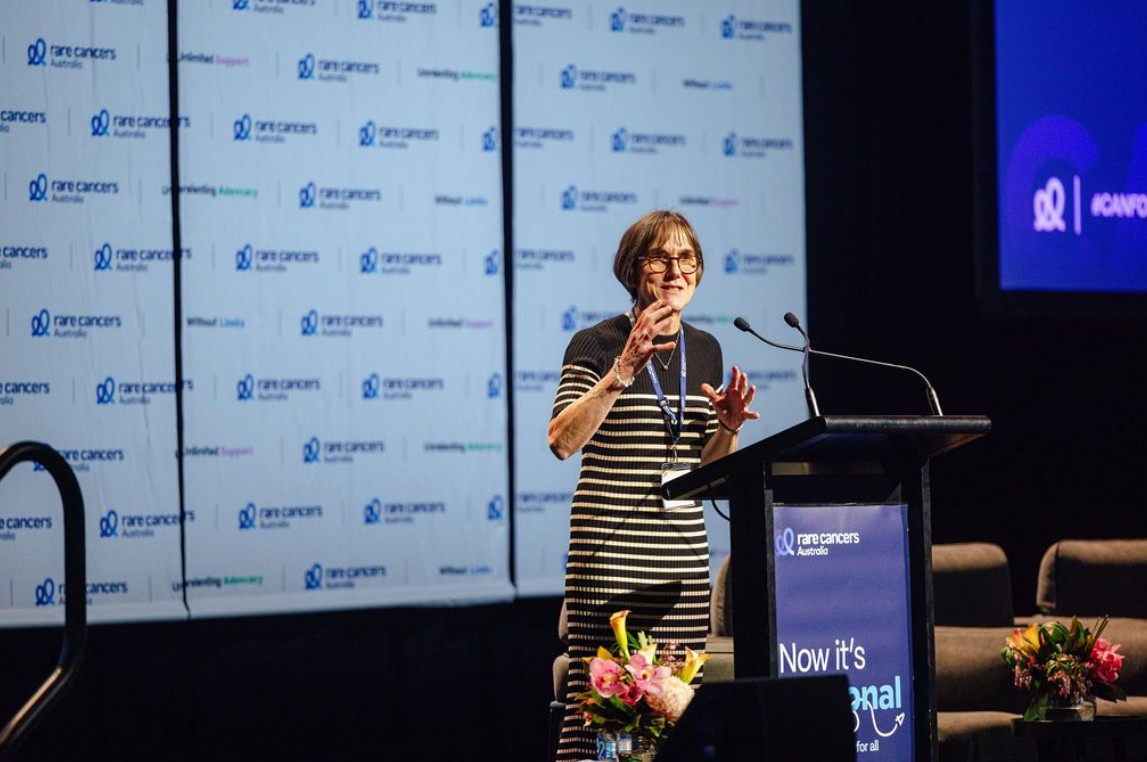
The importance of listening to and partnering with patients and carers as a catalyst for meaningful change underpinned every story, presentation and conversation at the Forum. “Listening to hear and learn is an essential catalyst for meaningful and equitable change”. It was my privilege to be asked to talk about the work we are leading in in the Department of Nursing at the University of Melbourne to partner with people with lived experience and multidisciplinary colleagues and national support organisations to develop and test new approaches to care that address inequity of access to specialist cancer nursing navigation and support for people affected by cancer; and an initiative that will enable every person who has a cancer diagnosis to be assessed for social determinant of health needs that may impact their opportunity for the best cancer experience and outcomes possible.
For more information, see the Rare Cancers Australia Report: Now it's personal.
Watch Mei's talk, 'What's the point in asking? Experience as a catalyst for change' and other videos from the CanForum25 series.
By Prof Mei Krishnasamy