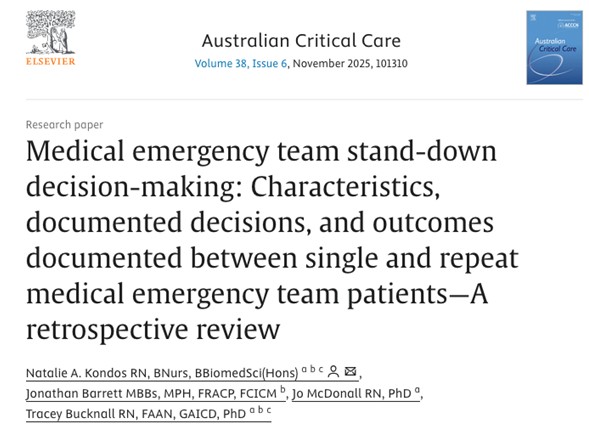
New insights into patient outcomes from Medical Emergency Team calls
A recent study led by Natalie Kondos, lecturer from the Department of Nursing, has shed new light on the documentation practices and outcomes associated with Medical Emergency Team (MET) calls in hospitals.
The study, an output from Natalie’s PhD, compared patients who had a single MET call to those who required repeated MET calls during their hospital stay. While overall documentation rates were similar between groups, the research revealed that patients with repeat MET calls had significantly higher documentation of care outcomes (72% vs 48.8%) compared to single MET call patients. Notably, for both groups, escalation plans were documented less than 50% of the time, highlighting an area for potential improvement in MET processes.
The study also uncovered striking differences in patient outcomes between the two groups. Patients requiring repeat MET calls experienced poorer outcomes, including double the in-hospital mortality rate (15.2% vs 7.6%), almost twice the average length of hospital stay (21 days vs 10 days), and were three times more likely to be discharged to rehabilitation rather than home (28% vs 9.6%). These findings emphasise that patients requiring repeat MET interventions may represent a higher-risk group needing more intensive monitoring and care.
This research provides valuable insights for improving MET processes and potentially identifying patients at higher risk of deterioration. It underscores the critical nature of thorough documentation and careful consideration of escalation plans, especially for patients who may be at risk of requiring repeat interventions. For clinicians involved in MET responses, the study highlights the importance of comprehensive documentation during MET calls, particularly for escalation plans.