Funding success for Optometry and Vision Sciences team
DOVS has begun the year with multiple grant successes.
Dr Phil Bedggood and A/Prof Andrew Metha received a prestigious three-year grant from the Australian Research Council (ARC) for their Discovery Project, 'Ultrafast Imaging of Physiological Processes in the Human Eye.' They’ve developed special optical imaging techniques to study individual cells in the living eye at extremely high speeds. The team will expand to include two new PhD students and a post-doctoral fellow. The team aim to make novel observations of dynamic processes within the eye such as how light is converted into electrical energy, the pulsing of red and white blood cells through the smallest capillaries, and the rapid eye movements involved in fixating and scanning scenes. Ultimately, the novel methods developed in this project will lead to better understanding of normal visual physiology and pinpoint treatment possibilities for disorders affecting the cellular level processes of the eye.

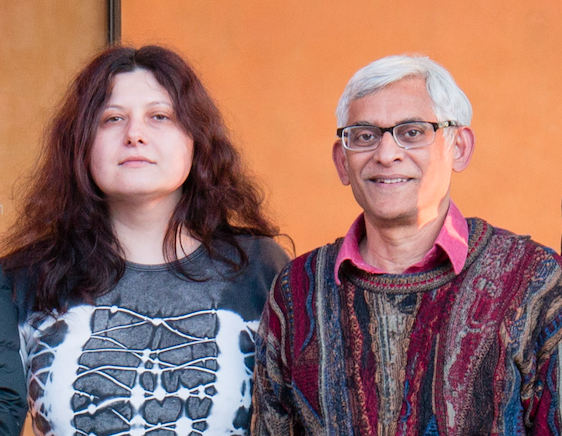
Prof Trichur Vidyasagar and Dr Ekaterina Levichkina and their collaborators from the University of Melbourne and the University of Wisconsin secured a four-year National Health and Medical Research Council (NHMRC) Ideas Grant, which fund high quality health and medical research to build research capability. Their project, 'Exploring mechanisms underlying the effects of vagal stimulation in the treatment of neurological disorders', will study how inputs from the eye combine with signals from internal organs, especially the gut, to influence brain activity underpinning some neurological disorders. By understanding the normal physiology of interactions in non-human primates, this study will help inform clinicians in improving vagus nerve stimulation therapy, which is being increasingly used in epilepsy and other conditions such as depression and migraine.
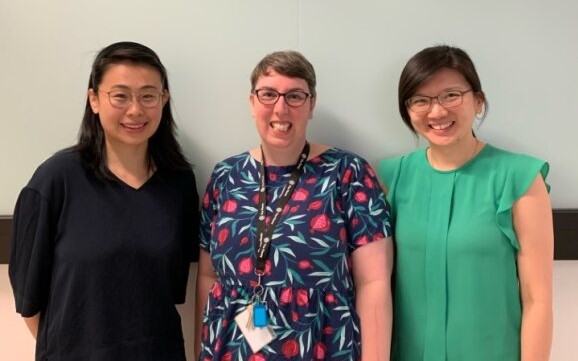
Finally, Dr Laura Ellet (The Florey), Dr Pei Ying Lee (UoM Department of Optometry and Vision Sciences) and Dr Helen Jiao (UoM Department of Anatomy and Physiology) have secured funding through the Medical Research Future Fund (MRFF) Early to Mid-Career Researchers Scheme. Their multidisciplinary project 'Retinal biomarkers in prion disease' will use a suite of uniquely applied non-invasive retinal imaging techniques to study early stage prion disease, a rare and fatal neurological condition. Identifying potential novel retinal biomarkers enables early detection of prion disease before irreversible damage occurs to the brain. This would mean treatments given early have the chance to improve patient outcomes.