Eyes and Ears Abroad
Optometry and Audiology students found screenings are better together
In September, two groups of students – four students from audiology and four from optometry – and one supervisor from each headed to Mae Sariang, Thailand. For two weeks, they travelled to schools and community locations under the guidance of Challenges Abroad to run educational workshops and clinical hearing and vision screenings. Despite the hot weather, stark humidity, language barrier and plethora of insect life, the group was welcomed by the community and managed to test nearly 300 people.
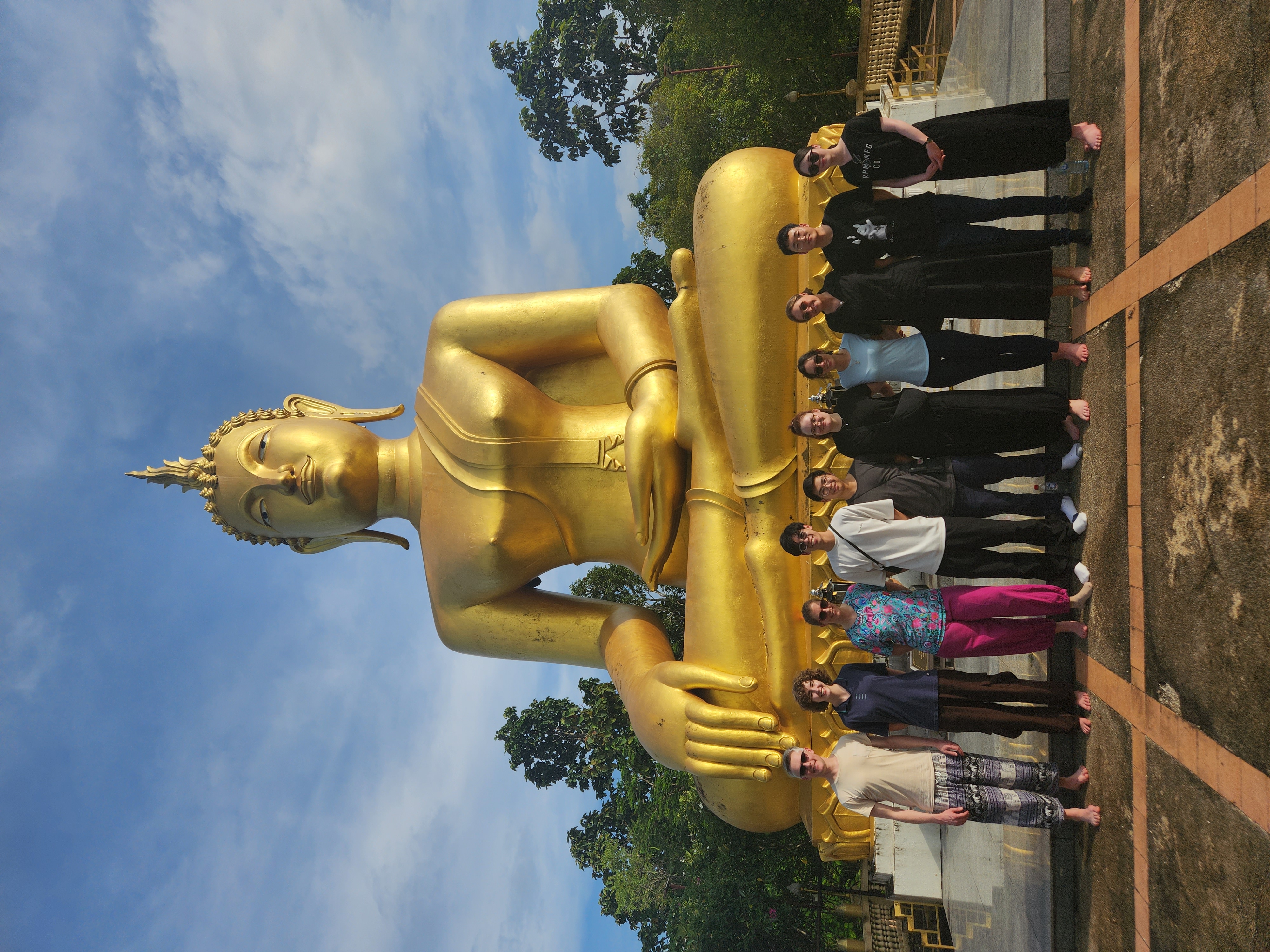
Despite both Optometry and Audiology offering multiple international clinical placements for their students, a key standout component of this placement was its interdisciplinary nature. Although the students remained within discipline groups in the beginning, a structured approach to the placement broke down discipline barriers. Students started by working in pairs within their own discipline, then assisted students from the other discipline with data entry, clinical practice, practical clinical support, and results recording. By the end of the clinical placement, the students had taught each other many facts and techniques from their own discipline, including acoustics, optics, clinical processes, communication techniques and management options.
Another highlight of this placement was the students’ engagement with schools and community groups by delivering interactive workshops. The students educated workshop participants on basic ear and eye health, red flags needing medical attention, and tips for communicating with people who have sensory loss. Delivering workshops with a language barrier was a real challenge, but the students honed their non-verbal communication skills and gamification to make these workshops engaging and informative. During the second week, the group also met with a local ophthalmologist and ENT who shed light on local prevalence of various hearing and vision pathologies and available management options. Reflections on these conversations, and on the trip as a whole, will allow the team to refine workshop and clinical delivery for future groups.