30 Years of the Department of Physiotherapy at The University of Melbourne
In 2024 the Department of Physiotherapy is celebrating 30 years of Physiotherapy graduates. The Department is distinguished by its commitment to fostering research and innovation, professional development, community engagement, education and training. It serves as a central hub aimed at improving health outcomes and advancing the practice of physiotherapy.
- Wednesday 5 June 2024
-
7:00pm
Webinar: Technology versus tradition, physiotherapy video consultations for managing knee osteoarthritis
As part of the celebration of the 30 years of Physiotherapy graduates at the University of Melbourne, a webinar took place on June 5th 2024, where Professor Rana Hinman, physiotherapist and Deputy Director of the Centre for Health, Exercise and Sports Medicine at the University of Melbourne, discussed the findings of the recently published Lancet article.
The PEAK non-inferiority RCT compared physiotherapy videoconferencing to in-person care for knee osteoarthritis.

- Wednesday 11 September 2024
-
5:00pm
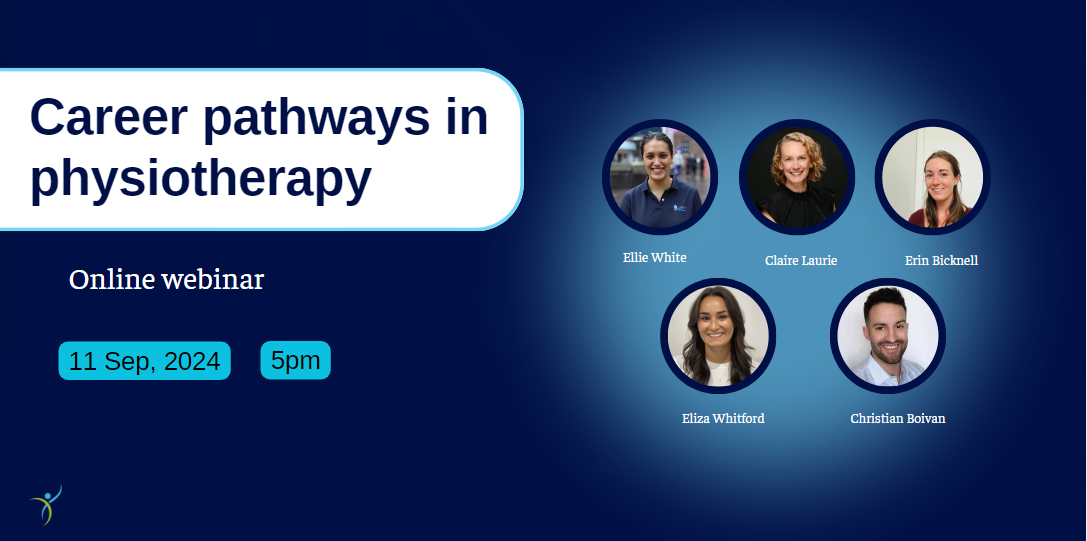
Webinar: Career pathways in Physiotherapy
As part of the celebration of 30 years of Physiotherapy graduates at the University of Melbourne, a webinar was held on September 11, 2024. This event featured a panel of diverse alumni from the Department of Physiotherapy, who shared their unique career pathways and experiences within the field.
The discussion highlighted different career pathways in physiotherapy, providing valuable insights into how these professionals have made significant contributions to health and wellness in their communities.
- Friday 18 October 2024
-
7:30pm
Department of Physiotherapy: 30th Anniversary Gala Dinner
The Department of Physiotherapy hosted a memorable gala dinner on October 18th to celebrate 30 years of physiotherapy graduates. The evening was filled with moments of reminiscence, reconnection, and dancing, creating an unforgettable atmosphere for all who attended.

Alumni Impact Stories
Find motivation in the accomplishments of Physiotherapy graduates from The University of Melbourne
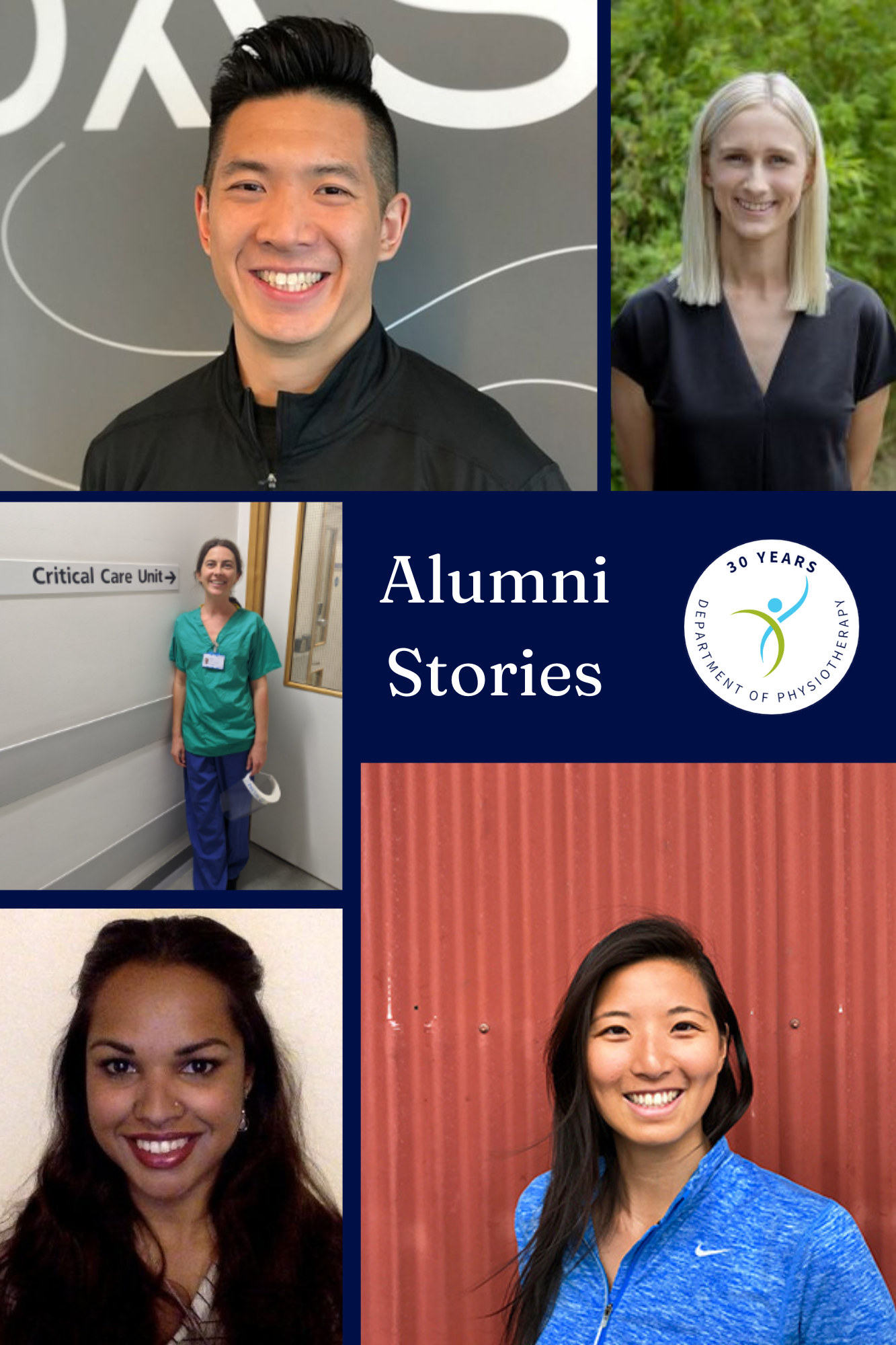
Click here to follow their stories
Hear from our current and past heads of department
As part of our milestone celebration marking 30 years of physiotherapy graduates, we have reached out to both current and former heads of department. We sought their valuable insights on their experiences and their perspectives on the future of physiotherapy.
Explore their stories and gain a deeper understanding of their journey and the evolving field of physiotherapy:
Fiona Dobson
Could you please share one of your favourite memories as head of the department so far and highlight a significant achievement or milestone of the department during your tenure to date?
Being the newest Head on the block has meant that I get to reap the rewards of all the hard work that has been put in before me. So, for me my favorite part of being the current HoD, is OUR PEOPLE (aka #physiofam). We are a department of incredible talent: our academics, graduate researchers, students, professionals and partners. The talent that we attract and nurture to see flourish in education, research and the healthcare workforce. The talent we see circle back from our alumni, partners and community. A significant milestone of the department during my tenure to date is bringing all our people together to roll out a new refreshed Doctor of Physiotherapy program that will even better prepare our graduates and future physiotherapy for the healthcare reform that is upon us.
What challenges is the department facing and how do you think they will make the department stronger?
Biggest challenges for the department and physiotherapy are challenges that the healthcare workforce faces with budget uncertainty, inequitable access to healthcare and staff burn out, leading to physios leaving the profession. This will place great challenges on our education program such as clinical placements for the DPT. Recent changes to research funding models also places more uncertainty on securing research funding for our research teams. I think the department drives a culture that is resilient , innovative and adaptable, which will enable us to work with our partners and communities to move through these challenges towards positive growth.
What are you most excited about for the future of physiotherapy?
Healthcare reform that will bring changes to scope in practice, more equitable access to healthcare and the potential for digital technology and AI to assist us to provide better education, research and ultimately health outcomes for the community we serve.
Meg Morris
Could you please share one of your favourite memories as head of the department so far and highlight a significant achievement or milestone of the department during your tenure to date?
One of my favourite memories was when the Physiotherapy team decided that we would introduce the Doctor of Physiotherapy program. Together with our health service partners, consumers and student representatives, we started working together on the vision, model and curriculum elements for this program which evolved to be a highly successful model of health professional education that incorporated both research and course work elements.
What challenges is the department facing and how do you think they will make the department stronger?
The challenge faced at the time was that physiotherapy research was emerging as a priority and many of the teaching and learning staff did not have research higher degrees. The physiotherapy curriculum at the time did not incorporate very much on research or research translation into clinical practice and education. As a Department we worked really hard to provide staff the dedicated time, mentoring and support so they could complete their higher degrees and become research active and more effectively include research in the curriculum at all levels.
What are you most excited about for the future of physiotherapy?
I am really excited about the future impact of Physiotherapy to health and wellness in Australians and people across the globe, through leading research on exercise, physical activity and rehabilitation, to improve peoples lives.

Gillian Webb
Could you please share one of your favourite memories as head of the department and highlight a significant achievement or milestone of the department during your time as HoD?
The most significant milestone during my tenure was the development and implementation of the Doctor of Physiotherapy Program. When the University made the decision to go to graduate programs, we needed to consider what would be best for Physiotherapy. I was fortunate enough to visit a number of DPT programs in the USA and see how they managed their programs to give us some idea of what was involved.
A lot of time and effort went into developing the curriculum by many academic and clinical staff. The development of strong relationships with our clinical partners brought a greater depth to our department, and I believe contributed a great deal to the success of the program.
The biggest challenge was to get it through the University’s Academic Board. This was a time of great change throughout the university and required strong leadership in the carrying out of the vision. It was stressful but rewarding to be part of this change and I was grateful for the collegiality demonstrated by many people within the faculty and the wider university.
What challenges did the department face and how do you think they made the department stronger?
As always budget and staffing were key issues. When the program started, we were a School of Physiotherapy within the Faculty. This later changed when we became a department in the newly formed School of Health Sciences. This brought both challenges and opportunities. It enabled us to have closer ties with other health professional programs in the faculty and work to develop collaborative practice and research but also changed the way the department was administered and funded.
I was very proud of both our academic and administrative staff who worked so hard to ensure the best possible outcome for the new program while continuing to teach out the bachelor’s degree. The staff were very committed and worked very well as a team.
What are you most excited about for the future of physiotherapy?
I see a very strong future for physiotherapy as long as we are able to adapt to new ways of thinking and doing. As physiotherapists we have a key role to play in primary health care in enabling people to live healthy lives. We have an important task of keeping people out of the hospital sector and enabling them to participate in society to the best of their ability.
New technologies such as AI and robotics will be part of our practice and we must research their uses for better patient access and outcomes.
However, we also must remember that as physiotherapists we are privileged to use “touch” in our practice. Touch is a powerful communication tool as well as an important therapeutic intervention in many aspects of work from treating preterm babies through to the frail elderly.
The future is ours to develop and advance. I hope that our graduates will continue to bring their passion and commitment to our profession that is such an important component of the health sector enabling people to participate to their fullest in society.
Linda Denehy
Could you please share one of your favourite memories as head of the department and highlight a significant achievement or milestone of the department during your time as HoD?
During my time as HOD we introduced the ‘new’ DPT. Much collaborative ‘co-design’ work had gone into the design of the DPT so it was a huge milestone for physio at UoM. Interestingly, it was going to be called DPhysio but I had a phone call from then VC Glynn Davis (unusual to hear directly from a VC!!), he asked that we consider calling the course a DPT as he thought from a marketing perspective this would be more successful. We did of course follow his suggestion.
My other favourite memory was graduations in Wilson Hall where I was privileged to read out graduand names and shake their hands. It was very special.
What challenges did the department face and how do you think they made the department stronger?
The challenges during my time as HoD were indeed similar to most years since inception of the course at UoM- Clinical placements. However, after introducing a three year physio course after an undergraduate 3 years we worried about applications to the DPT. Other courses were 4 years in total. Fortunately, we attracted outstanding students, as we still do.
What are you most excited about for the future of physiotherapy?
The practice of Physio is now well supported by evidence. This has enabled the profession to move forward. Continued research and implementation of research findings will cement the place of the profession in our new digital world.