Living with Spinal CSF Leak.
Survey study highlights the perfect storm of living with spinal Cerebrospinal Fluid leak.
Spinal Cerebrospinal Fluid (CSF) leak creates the perfect storm: varied neurological symptoms, invasive medical procedures, poor access to clinical experts, reliance on self-advocacy, and a huge impact on daily life, often leaving sufferers bed-bound.
CSF is the clear fluid that cushions and protects the brain and spinal cord. CSF can leak if there is a break, hole or tear in the surrounding membrane (the dura), like having a puncture in a sealed, fluid-filled balloon. This can make the brain lose its buoyancy and sag within the skull, causing a wide range of symptoms. A spinal CSF leak can occur after a medical procedure that damages the dura or spontaneously.
Thanks to a Faculty of Medicine, Dentistry and Health Sciences Early-Mid Career Research Project Catalyst Grant, researchers Dr Lachlan Knight and Dr Bao Nguyen worked with Rachel Smith and Spinal CSF Leak Australia to co-design a survey to highlight the real-world experience of people living with spinal CSF leak in Australia and New Zealand.
The survey findings show that, like in other countries around the world, there are compounding effects of the lived experience of spinal CSF leak with impacts across symptom onset, diagnosis and treatment, and quality of life.
As we mark Spinal CSF Leak Awareness Week (‘leakweek’, 1 – 7 June 2026), we call for further international and collaborative efforts to raise global awareness of spinal CSF leak and support consistent and accessible referral, diagnostic, and treatment pathways.
You can read the open access article here.
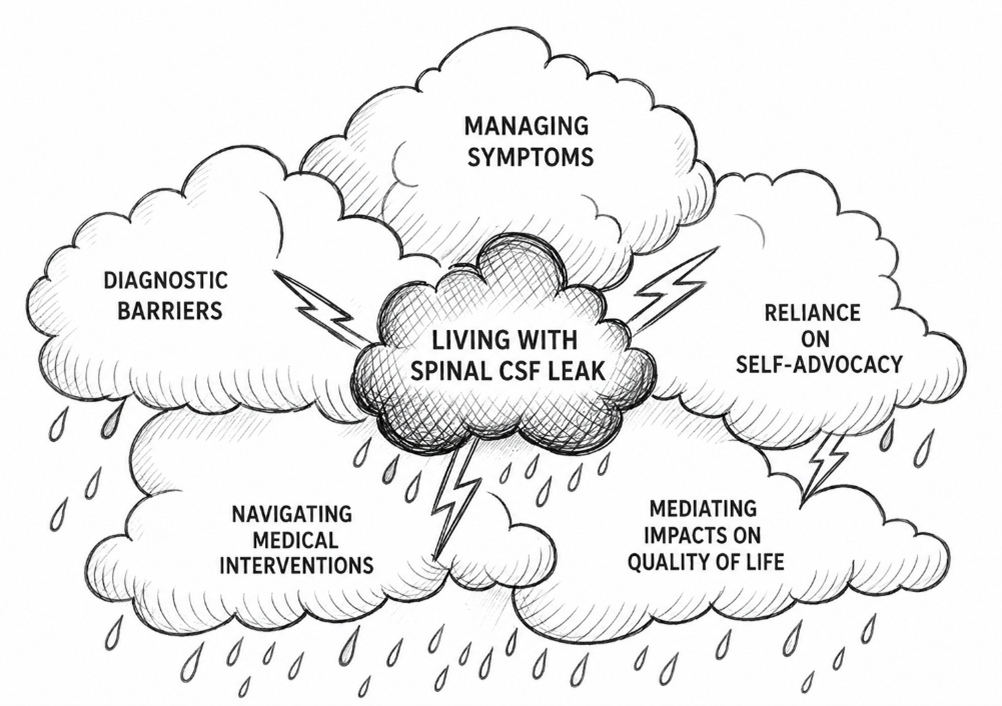
“Adapted from Knight et al. "Getting to diagnosis was an absolute nightmare": survey insights about the lived experience of spinal CSF leak in Australia and Aotearoa New Zealand. J Neurol. 2026;273(5):300. doi:10.1007/s00415-026-13840-y”