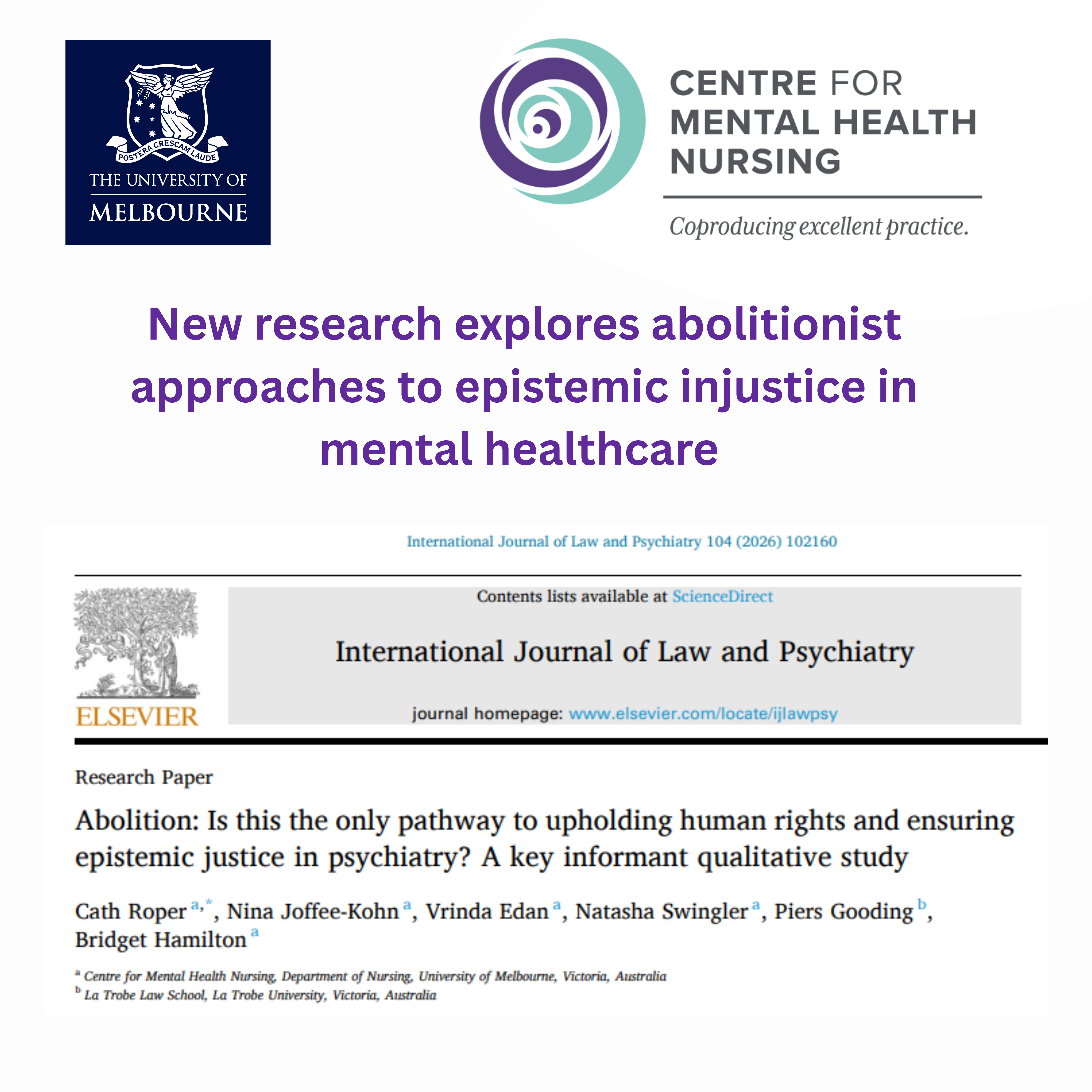
New research explores abolitionist approaches to epistemic injustice in mental healthcare.
Cath Roper and Nina Joffee-John from the Centre for Mental Health Nursing published an article on the Epistemic Injustice in Health Care platform, examining how abolitionist thinking can address epistemic injustice within mental healthcare systems.
Drawing on interviews with 15 mental health advocates, service users and survivor activists across five countries, their research highlights how people labelled as 'mentally ill' are often denied credibility, with their knowledge and lived experience dismissed as unreliable. This form of 'testimonial injustice' is reinforced by legal and medical systems that privilege clinical authority over lived experience.
Unlike other areas of healthcare, mental health systems can legally enforce treatment without consent, raising significant human rights concerns. Participants in the study described these laws as discriminatory and harmful, arguing they undermine autonomy, restrict freedom, and in some cases resemble coercive or carceral practices.
The authors explore psychiatric abolition as a framework for change - calling for the dismantling of coercive mental health laws and a shift toward community-led, non-violent models of care. Alternatives highlighted include peer-led support, investment in social determinants of health, and supported decision-making approaches aligned with the United Nations Convention on the Rights of Persons with Disabilities.
Importantly, the research emphasises the leadership of First Nations and Indigenous communities in shaping more just and self-determined approaches to care.
This work contributes to growing global conversations about human rights, lived experience leadership, and the future of mental health systems.
You can read the full paper here.