Seeing the lifelong impact of early eye care
When Rita Abou-Issa walks into clinic each day, she is reminded that the eye care delivered in childhood can shape a person’s life for decades to come. Now a paediatric optometry resident at ACO Eye Health, Rita works at the intersection of clinical expertise, compassion and early intervention - supporting children and families at some of their most vulnerable moments.
A 2024 graduate of the University of Melbourne’s Doctor of Optometry program, Rita is already building a career defined by purpose, leadership and impact within the public eye care system.
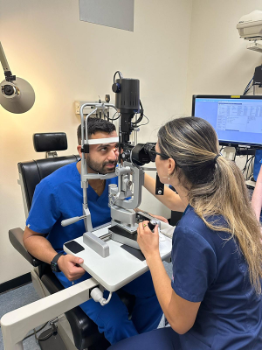
Working where care matters most
Rita is currently in her second year as a Paediatric Optometry Resident at ACO Eye Health, where she works across several specialty clinics, including myopia management and the Royal Children’s Hospital–ACO Eye Health collaborative clinic.
“These clinics allow me to deliver equitable eye care to patients of diverse ages, backgrounds and clinical needs,” Rita says. “It’s incredibly meaningful to work in these settings.”
Her role involves managing children with a wide range of ocular and systemic conditions, often within multidisciplinary teams - an experience that continues to shape her identity as an optometrist and emerging leader in the field.
A personal motivation for preserving vision
Rita’s decision to pursue optometry was influenced long before she entered university. Growing up alongside her cousin, who is blind due to retinopathy of prematurity, she witnessed firsthand the lifelong impact of vision loss.
“That experience stayed with me,” she says. “It inspired me to pursue a career focused on preserving eye health and visual function.”
Since graduating, that early motivation has evolved into a clear professional focus. “I’ve developed a strong passion for paediatric optometry and early intervention,” Rita explains. “Where timely care can have a lifelong impact.”
Prepared for a complex and varied profession
Reflecting on her time in the Doctor of Optometry, Rita points to the breadth of clinical placements in her final year as particularly formative.
“Exposure to a wide range of practices, each with distinct patient demographics, clinical priorities and practice styles, helped me develop my clinical confidence and adaptability,” she says. “It also highlighted the diverse ways optometrists contribute to patient care.”
That experience has proven invaluable in her current role, where no two clinics - or patients - are ever the same.
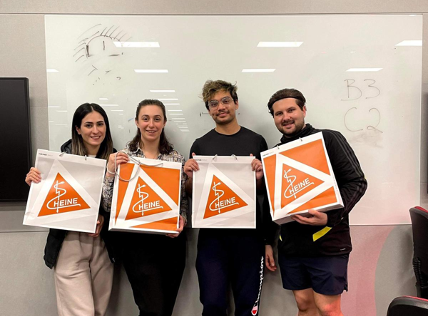
Image: Rita (far left) with her peers during her Doctor of Optometry studies at Melbourne
Finding meaning in measurable change
One of the most rewarding aspects of Rita’s work has been her involvement in the Royal Children’s Hospital–ACO Eye Health collaborative clinic.
“Managing the eye health of children with complex ocular and systemic conditions has reinforced just how much can be achieved within optometry’s scope of practice,” she says.
Seeing measurable improvements at follow-up appointments, while also building trust with children and their families, continues to be a source of pride. “Creating a safe, reassuring environment is just as important as the clinical outcomes,” she adds.
Advice for the next generation of optometrists
Looking back on her journey, Rita has thoughtful advice for students beginning the Doctor of Optometry.
“Always remember why you chose this profession,” she says. “There will be days when you feel exhausted or question yourself, but there will also be moments when you genuinely change someone’s life for the better. Those moments will come more often than you expect.”
Through graduates like Rita Abou-Issa, the University of Melbourne’s Doctor of Optometry program continues to develop future leaders in optometry - clinicians equipped to deliver expert care, advocate for patients and shape the future of eye health.