From Optometry Student to Specialist: Finding Purpose in Practice and Research
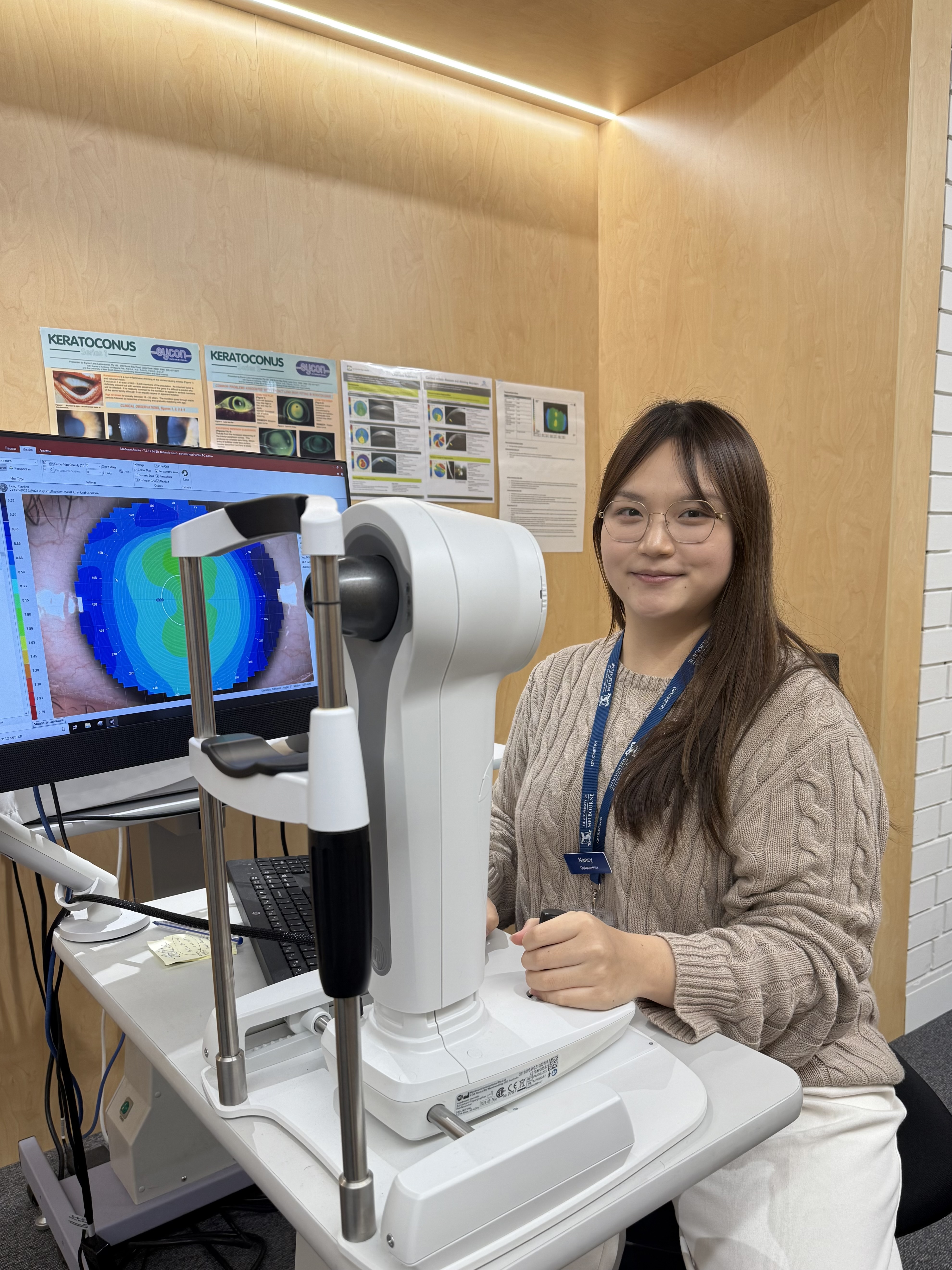
When Nancy Huang began her optometry studies at the University of Melbourne, she knew she wanted to help people, but she did not anticipate just how profoundly the program would shape her confidence, direction, and voice as a healthcare professional. Today, Nancy is not only a practising optometrist at two of Australia’s leading institutions in optometric care, but she is also preparing to start a PhD in anterior eye research, supported by a full scholarship.
Along the way, she has found her passion, her community, and a clear vision for what meaningful, patient-centred care can look like.
Turning interest into impact
“I developed a deep passion for helping others during my studies,” says Nancy, who completed both her Bachelor of Biomedicine and Doctor of Optometry at the University of Melbourne. “As a people-oriented professional, I find great fulfilment in supporting and assisting patients, ensuring their needs are met, and making a positive impact on their lives.”
Her choice to pursue optometry was influenced by a personal appreciation for the impact of early intervention and the critical role education plays in preventing vision problems. “I’m passionate about raising awareness, offering guidance, and ensuring patients, especially children, receive timely and effective care,” she shares.
Choosing the University of Melbourne
Nancy was drawn to the University of Melbourne’s Doctor of Optometry program for its strong integration of biomedical science, clinical training, and a comprehensive approach to optometric education.
“I chose the University of Melbourne for my optometry studies because of its well-rounded program, which offers a strong foundation in health science while emphasizing the importance of considering the whole body when managing eye health,” she says. “The ability to integrate theory with practical experience stood out to me.”
She also appreciated the extensive research opportunities and clinical placements that were available. “I was fortunate to rotate through almost every type of employment within the Australian optometry sector, which helped me gain diverse and invaluable insights into the profession.”
Learning from the best
A pivotal part of Nancy’s journey was the mentorship she received from passionate, skilled practitioners. “Their comprehensive knowledge, outstanding interpersonal skills, and unwavering dedication to continuous learning truly shaped my perspective on patient care,” she reflects.
“They showed me that being a great optometrist isn’t just about technical expertise – it's about building trust and delivering care that truly resonates.”
Bridging clinical care and research
Upon graduating, Nancy was selected for the Clinician-Researcher Training Pathway, allowing her to work at both the Melbourne Eyecare Clinic and the Australian College of Optometry - two leading institutions in the field.
“These clinics are renowned for their excellence in the optometry industry, and I have had the opportunity to work alongside some of the best practitioners in the field, further refining my clinical skills and expertise.”
Her academic ambitions have continued to grow. “I have developed a strong interest in the anterior eye field. I am excited to share that at the end of this year, I will be starting my PhD in this area, with the support of a full scholarship.”
Meaningful moments in practice
What continues to inspire Nancy are the everyday moments of connection with her patients. “One that stands out is working with paediatric patients and witnessing their transformation, from scared and timid to becoming happy, relaxed, and excited to see me.”
She also recalls heartfelt experiences that reaffirmed her choice to pursue this profession: “Receiving the most genuine and loving hug from a 78-year-old patient I managed for acute angle closure, or being gifted chocolates and a Christmas card – it is these small acts of appreciation that make the job so meaningful.”
Perspectives on the changing landscape of optometry
Nancy is excited by the evolving scope of optometry and the broader role practitioners are playing in primary healthcare.
“What excites me most about the future of optometry and eye care is the expanding role of optometrists in healthcare,” she says. “As we increasingly take on more responsibilities, such as prescribing oral therapeutics, we’ll be able to provide more comprehensive care and help close health gaps for patients, regardless of their background.”
The growing collaboration between optometrists and other healthcare professionals is also something she is enthusiastic about. “By working closely with a wider range of experts, we can provide the best possible care to our patients and adopt a more holistic approach to their health.”
She is also energised by the possibilities that emerging technologies and AI bring to the field. “These innovations will make our practice more efficient, allowing optometrists to spend more time focusing on patient care. By having more time to listen to patients and understand their individual needs, we’ll be able to provide more empathetic, individualised care and set a higher standard in the profession.”
Her advice for future students? Dive in and stay curious
Nancy encourages aspiring optometrists to explore the full breadth of the field and remain open to where their interests may lead.
“My advice to current optometry students is to stay excited and open-minded about the vast possibilities within this fascinating and widely applied industry,” she says. “Optometry offers incredible versatility – you have the option to specialize in a particular field or pursue a more general full-scope practice. Whether you choose to focus on paediatric optometry, behavioural optometry, binocular vision, ocular pathology, dry eye management, myopia control, or advanced contact lenses, there is a world of opportunities to explore.”
She also suggests being intentional about your learning path. “I recommend identifying an area of interest early on in your studies. Doing so will not only help you dive deeper into that field but will also allow you to get the most out of the program and your clinical placements.”
Her final piece of advice: stay curious. “Exploring different specializations while building a solid foundation in general practice will prepare you for a dynamic and fulfilling career. Remember, the field is constantly evolving with new research, technologies, and treatment methods, so the more you learn and stay curious, the further and more exciting your career can go. Don’t be afraid to pursue what excites you, as it will make your professional journey all the more rewarding.”

Nancy is a proud alum of the Doctor of Optometry program at the University of Melbourne, where her journey as a clinician-researcher began. In her downtime, she’s also a passionate scuba diver and ocean conservationist.
Learn more about the Doctor of Optometry program and discover where it could take you.